Buying guide · Updated 2026-07-29
Portable air conditioners in 2026, chosen by SACC and window fit
Portable does not mean vent-free: every real portable air conditioner still needs a sealed path to a window or exterior vent, and the strongest models weigh more than 70 pounds before you wrestle with the hose. A window unit is usually the cleaner, more efficient choice when the building and window allow one. When it does not, start with the lower DOE or SACC cooling rating, favor a dual-hose airflow path for sustained use, and measure the entire installation before buying. The three picks below cover different room sizes and installation tradeoffs without treating the larger legacy ASHRAE rating as usable room capacity.
See the 3-item shortlist ↓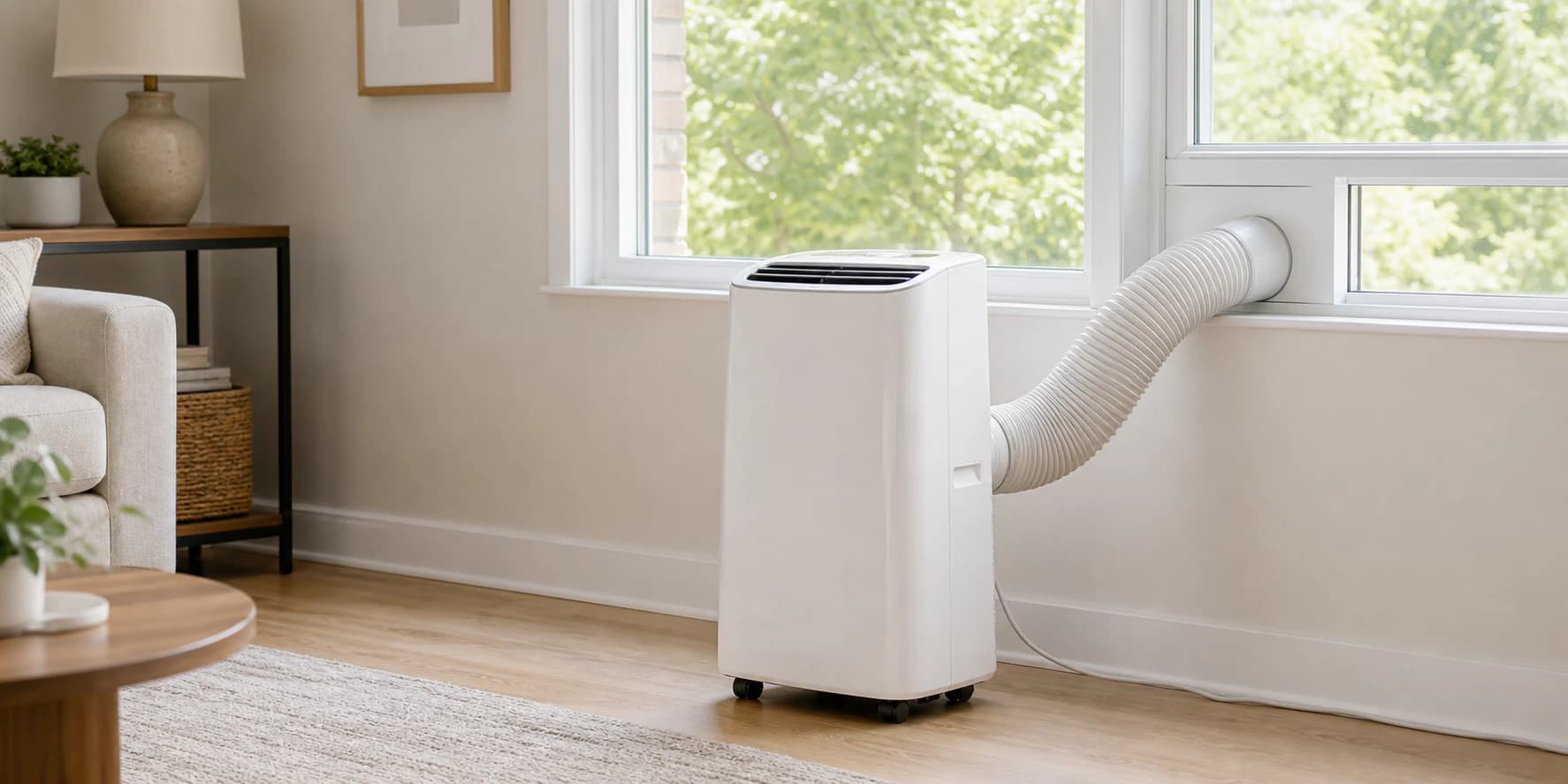
At a glance
Compare the short list
Start with the job each pick does best and its dated researched price. Jump to the full tradeoffs or check current listings without creating an account.
What actually matters
Compare DOE or SACC capacity
Portable units can show a large ASHRAE BTU number beside a much lower DOE or SACC rating. Use the lower DOE/SACC figure when comparing cooling output. For example, the LG LP1419IVSM is labeled 14,000 BTU under the older ASHRAE method but 10,000 BTU under the U.S. DOE method.
Choose the airflow path deliberately
A single-hose unit exhausts room air and pulls replacement air through gaps around the room. A dual-hose or hose-in-hose design uses outdoor air for the condenser path, reducing that negative-pressure penalty. The tradeoff is a larger, heavier window connection.
Measure the installed path
Check the window opening and type, window-panel range, hose length, outlet location, and floor space together. Keep the hose as short and straight as the manual allows, seal the panel, and confirm that a sliding or casement window has a supported adapter before ordering.
Plan for weight and power
The recommended inverter models weigh roughly 71 to 77 pounds and draw close to the limit of a standard 115-volt circuit under heavy cooling. Casters help on one level; they do not make stairs easy. Follow the manual's outlet requirements and do not plan on an extension cord.
Treat quiet and self-evaporation as conditional
Published low-noise figures describe the quietest mode, not maximum cooling. Auto-evaporation can reduce draining in ordinary cooling, but humid weather or dehumidifier mode may still require a gravity drain or tank emptying. Check both drain-port placement and the high-mode noise figure.
Strong starting points
Ordered by how broadly each fits the requirements above, not by commission. Specifications and prices vary by configuration and seller, so confirm both on the product page.

Pick 1 · Higher-capacity dual-hose cooling and tall windows
Whynter ARC-1230WN
$609.99observed across Best Buy, July 25–29, 2026
Whynter rates this inverter hose-in-hose model at 12,000 BTU SACC for spaces up to 600 square feet. Its published window kit spans 28 to 82 inches, giving it more documented installation range than most portable units, while five fan settings and a 42.5 dBA low mode provide useful control.
Worth checking: It weighs about 77 pounds, the combined hose extends only to 47 inches, and Whynter publishes 56.5 dBA on high. The wide window-panel range is valuable only if the 9.5-inch panel and hose route actually fit your opening.
Pick 2 · Quiet dual-hose cooling with straightforward smart control
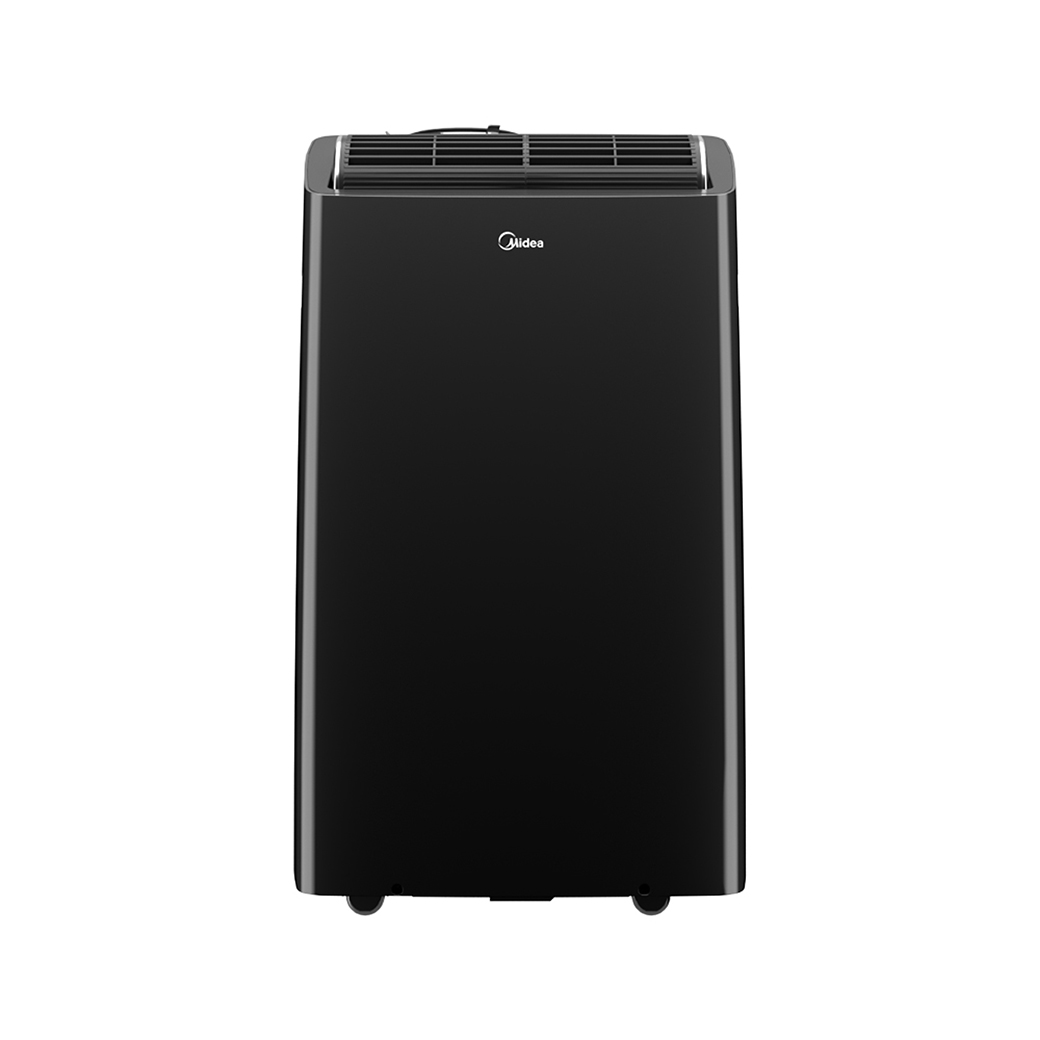
Midea Duo MAP14S1TBL
$659.99observed across Home Depot, July 25–29, 2026
Midea rates this hose-in-hose inverter unit at 12,000 BTU DOE for spaces up to 550 square feet and publishes operation as low as 42 dB. It combines cooling, dehumidifying, and fan modes with app, watch, and voice control.
Worth checking: It is movable furniture rather than a light appliance. The hose-in-hose assembly still needs a compatible, tightly sealed window opening, and the similar MAP14 model names make exact-suffix verification important.
Pick 3 · A widely available inverter model for a smaller installation
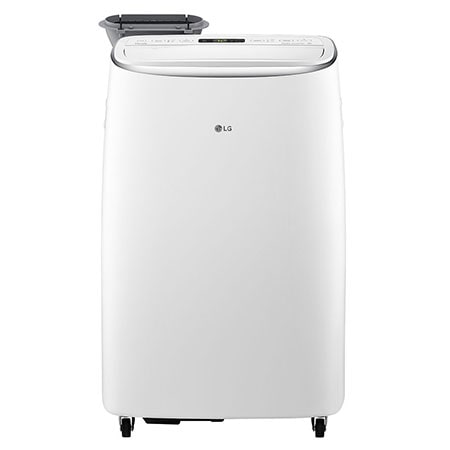
LG LP1419IVSM
$559.00 to $699.00observed across Home Depot and Plesser's research, July 25–29, 2026
LG rates this dual-inverter model at 10,000 BTU under the U.S. DOE method for up to 500 square feet, with sleep-mode noise down to 44 dBA. It has a conventional single exhaust hose, app control, four cooling fan speeds, auto swing, and an auto-evaporation system.
Worth checking: The single-hose design can pull warm replacement air into the room, so it is the compromise pick rather than the efficiency leader. It weighs about 71 pounds, and LG's 44 dBA figure is for sleep mode; the published high setting is 53 dBA.
Where to buy
Dated retailer observations, not live inventory. Match the exact configuration and confirm the final price before buying.
- Plesser's ↗
LP1419IVSM, 10,000 BTU DOE, white · observed
$699.00$759.00
Need a more personal shortlist?
Answer a few questions about how you'll use it and let the chooser narrow the field.
Help me chooseSources and further reading
The recommendations draw on the cited manufacturer documentation, safety notices, and independent testing, reviewed on 2026-07-29. Always verify the exact configuration on the product page before purchase.
- U.S. Department of Energy: Portable air-conditioner standards and test procedure ↗
- GE Appliances: Single-hose versus dual-hose portable air conditioners ↗
- Consumer Reports: Air-conditioner buying guide ↗
- Whynter: ARC-1230WN specifications ↗
- Midea: Duo MAP14S1TBL support and documents ↗
- LG: LP1419IVSM specification sheet ↗
- Best Buy: Whynter ARC-1230WN product page ↗
- Home Depot: Midea Duo MAP14S1TBL product page ↗
- Home Depot: LG portable-air-conditioner listings ↗
- Plesser's: LG LP1419IVSM product page ↗
Keep comparing
More home comfort guides
Updated 2026-07-29
Window air conditioners in 2026, chosen by room and window
Start with room size, window fit, voltage, and noise. These three inverter models cover small-to-medium rooms without pretending that the biggest BTU number is always better.
Read the guide →Updated 2026-07-26
Best air purifiers for wildfire smoke and allergies
Two room-air cleaners chosen around smoke CADR, filter cost, noise, and realistic room sizing.
Read the guide →Updated 2026-07-26
Best dehumidifiers for damp basements
Two 50-pint dehumidifiers for larger damp spaces, with drainage and cold-basement constraints up front.
Read the guide →We may earn a commission from some links on this page. As an Amazon Associate HoldTheCart earns from qualifying purchases.